
Chrome to Firefox Extension Porting: The Pitfalls
Background
After developing an extension for Chrome, the natural next step is porting it to other browsers. Firefox is generally considered the first choice since both browsers use similar Browser Extension APIs. This should be straightforward, right?
Not quite. Firefox has many subtle, long-standing issues that can become incredibly tricky if you encounter them. Below are some problems I’ve discovered while porting extensions to Firefox.
CSP Issues
CSP behavior in Firefox extensions is peculiar, vastly different from Chrome or even Safari.
Firefox Extensions Don’t Support Localhost Access
Firefox extensions cannot access localhost, preventing extension development frameworks like wxt from supporting dev mode hot reload1. The issue raised in Bugzilla has been open for 2 years2. Currently, the only workaround is to develop in Chrome, then build and validate/test in Firefox.
Firefox Restricts Extension-Injected Content Scripts Based on Website CSP
Firefox restricts extension-injected Content Scripts based on the website’s own CSP3. This involves bugs that have existed for 9 years4 and are unlikely to be resolved in the near term. Fortunately, you can bypass this by using declarativeNetRequest to disable website CSP.
Here’s a basic rules.json configuration to remove Content-Security-Policy from specific websites. While this introduces security concerns, it’s the least invasive approach for business logic:
[
  {
    "id": 1,
    "condition": {
      "urlFilter": "https://example.com/**",
      "excludedResourceTypes": []
    },
    "action": {
      "type": "modifyHeaders",
      "responseHeaders": [
        {
          "header": "content-security-policy",
          "operation": "remove"
        }
      ]
    }
  }
]
WASM Errors in Firefox Extension Pages
Using WASM in Firefox Extension Pages causes errors. For example, using esbuild-wasm produces the following CSP error:
Content-Security-Policy: The page's settings blocked a worker script (worker-src) at blob:moz-extension://708674c8-9b11-450a-9552-c0e679d39d8e/0dff485f-4f32-4d1a-a109-8ca61a3037a2 from being executed because it violates the following directive: "script-src 'self' 'wasm-unsafe-eval'"This occurs even after setting CSP in the manifest:
{
  "content_security_policy": {
    "extension_pages": "script-src 'self' 'wasm-unsafe-eval'; object-src 'self';"
  }
}
This is related to a 9-year-old bug. Even though developers have closed it, using WASM via blob URI still doesn’t work5.
For esbuild-wasm, it provides an option to disable webworker, which can solve this issue.
await initialize({
  wasmURL: wasmUrl,
  // Firefox Extension Page CSP disable blob worker
  worker: false,
})
Unable to Install Unsigned Extensions
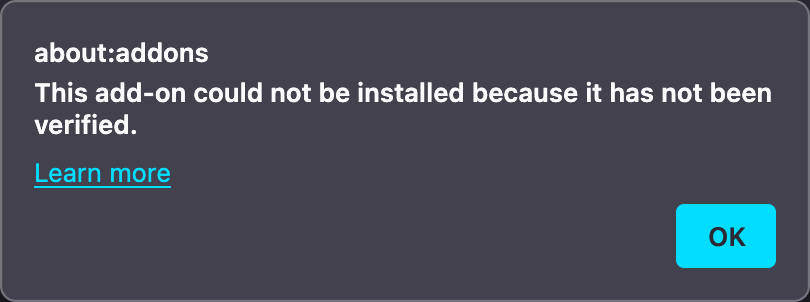
Firefox, much like Apple, requires all extensions to be notarized and signed6. Even if you don’t intend to publish for others, you must submit to AMO7 for review. Dragging a built zip file directly into Firefox results in the error: “This add-on could not be installed because it has not been verified.”
AMO Review Issues
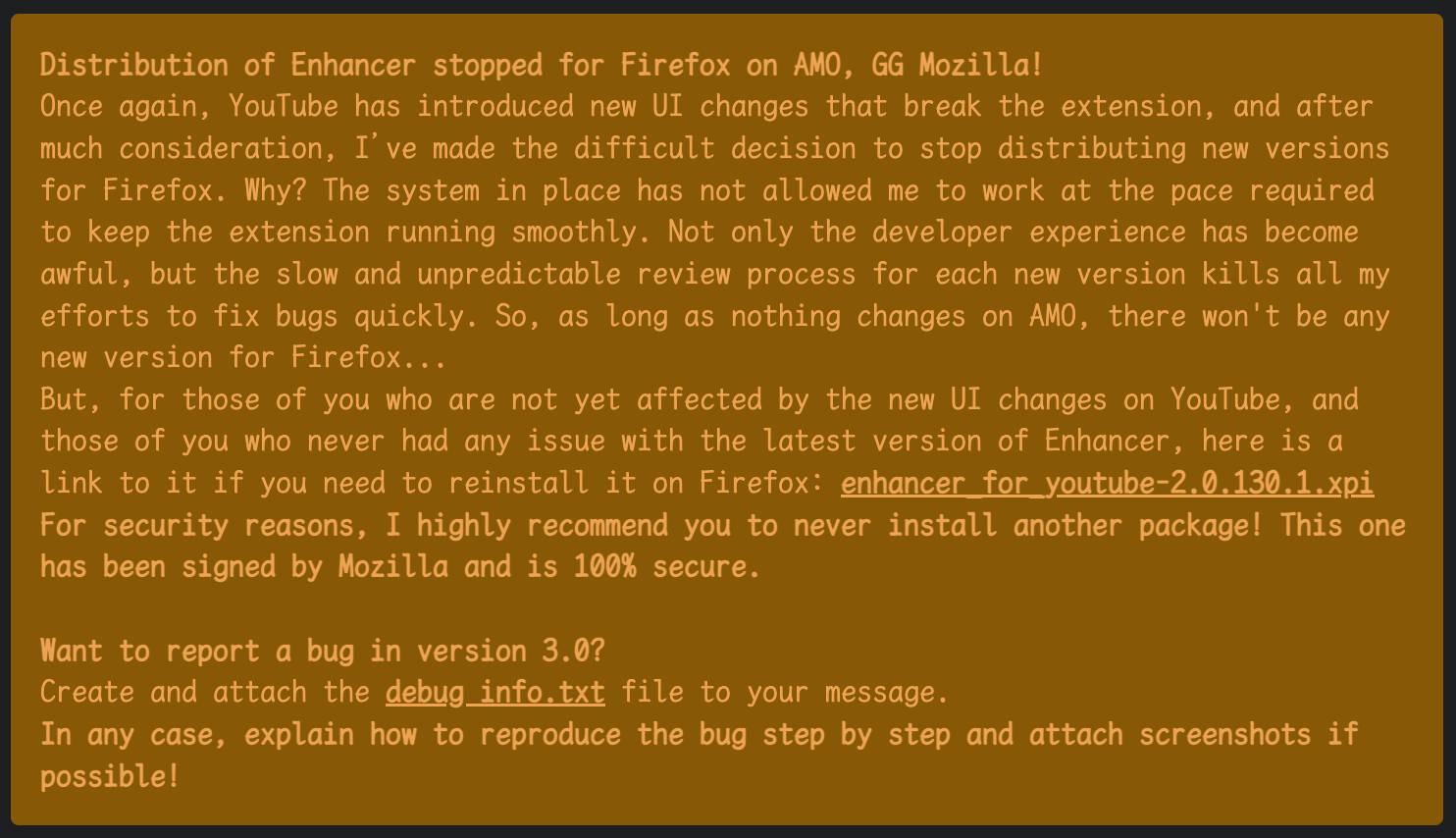
Once your extension reaches a certain user threshold, AMO reviews become exceptionally slow as they always require manual review. Moreover, reviewers aren’t always experienced browser extension developers—they might not even be web developers. The poor review process has frustrated some very prominent extension developers, leading them to abandon Firefox releases entirely. Examples include:
- uBlock Origin Lite, with over 11M users on Chrome8
- Enhancer for YouTube, with over 1M users on Chrome9
AMO Limits JavaScript Code Size
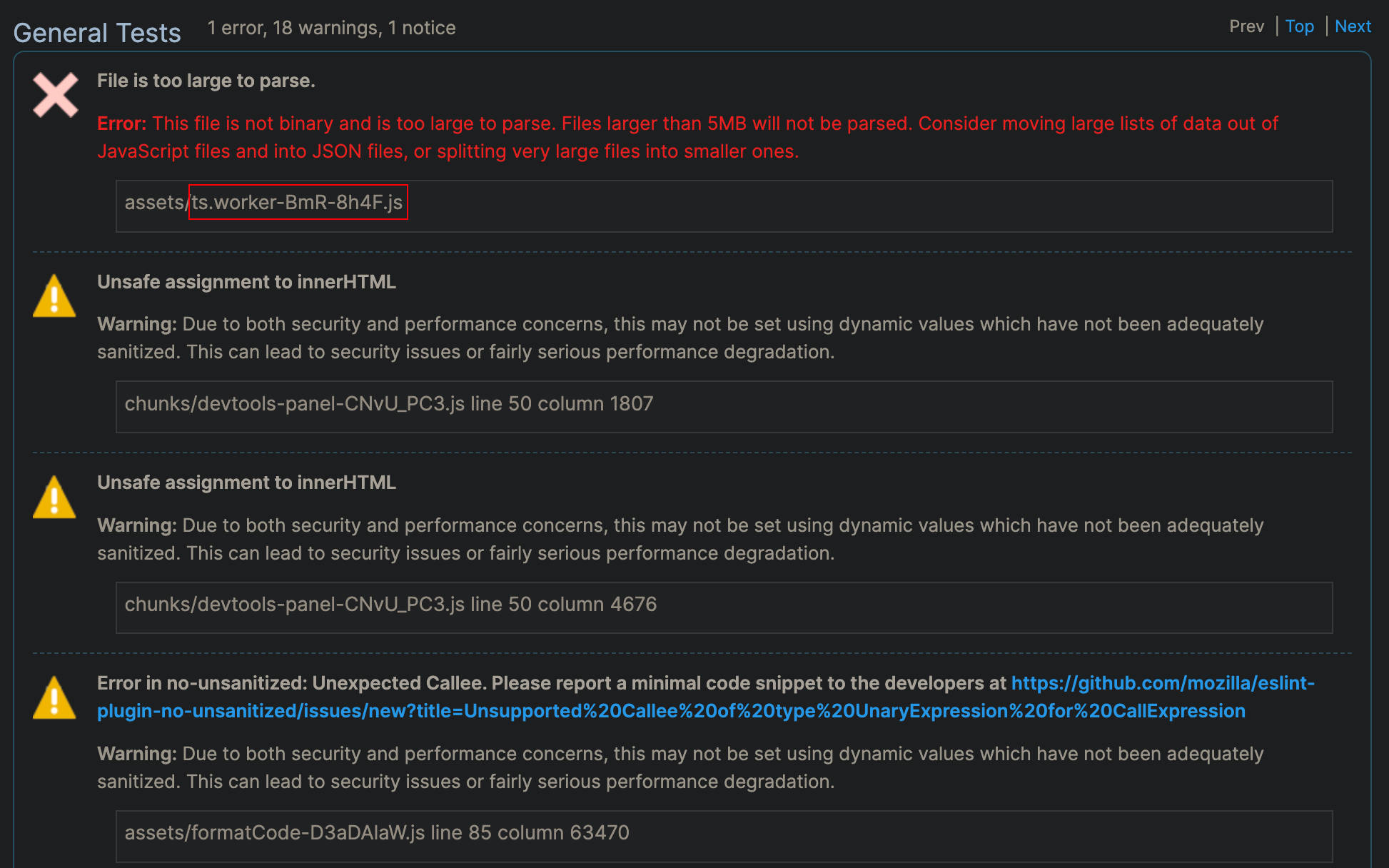
For example, when using monaco-editor, the TypeScript LSP code is very large, which directly causes the extension to be automatically rejected. This never happens on Chrome.
AMO Censorship
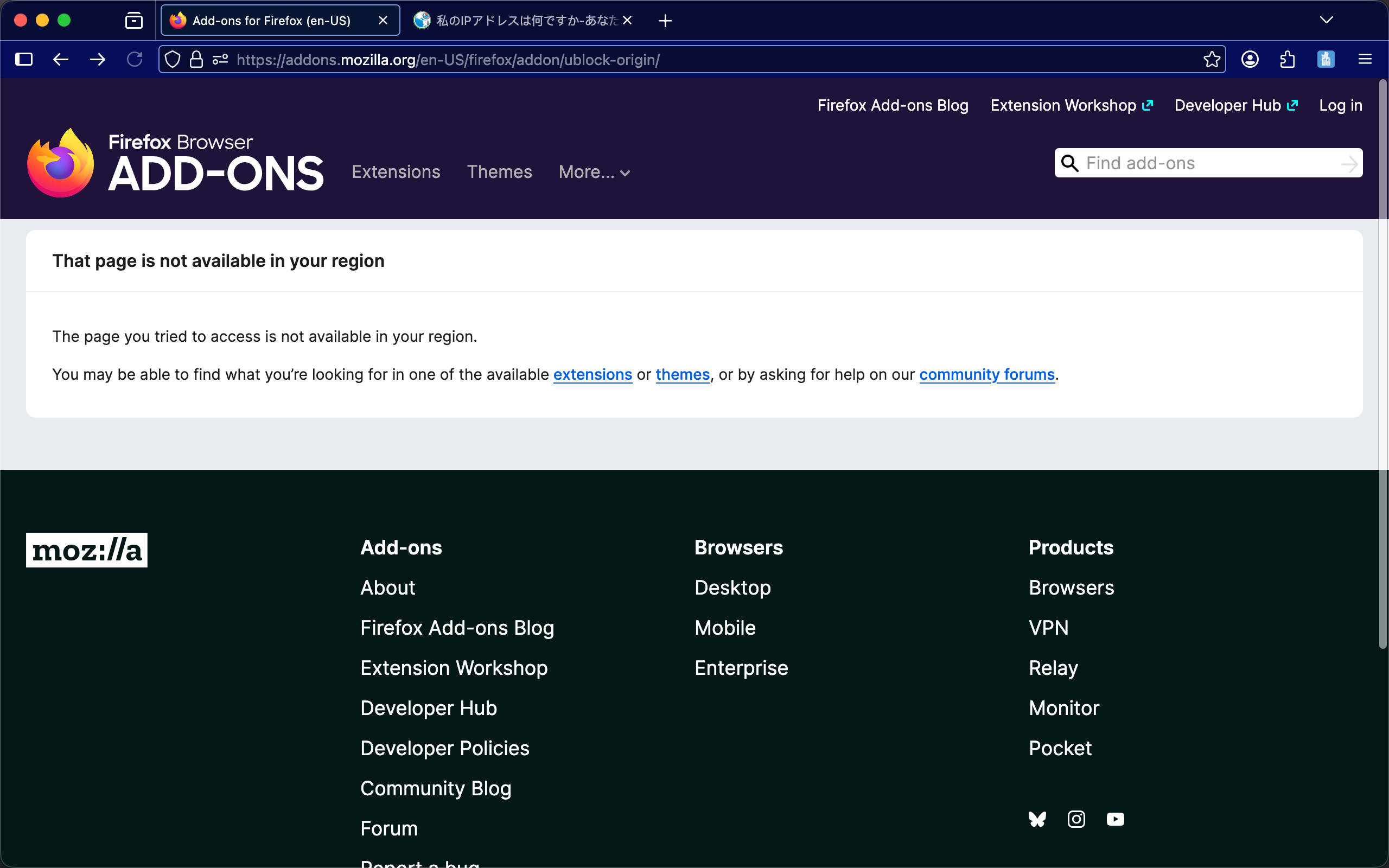
Yes, I know this sounds absurd. Firefox proudly proclaims “We are committed to an internet that includes all the peoples of the earth — where a person’s demographic characteristics do not determine their online access, opportunities, or quality of experience.” But this is meaningless, because they do block specific extensions in certain regions10. For example, in China, users cannot access the uBlock Origin extension, which makes Firefox pointless—even Chrome doesn’t do this.
Conclusion
Firefox was once an excellent browser, but in recent years, aside from riding on Chrome’s coattails (similar to Vue’s reputation), there hasn’t been much to write home about. Recently, they’ve started cramming AI features into the browser, seemingly always chasing shiny new things rather than genuinely addressing existing problems.